
Last updated November 15, 2026
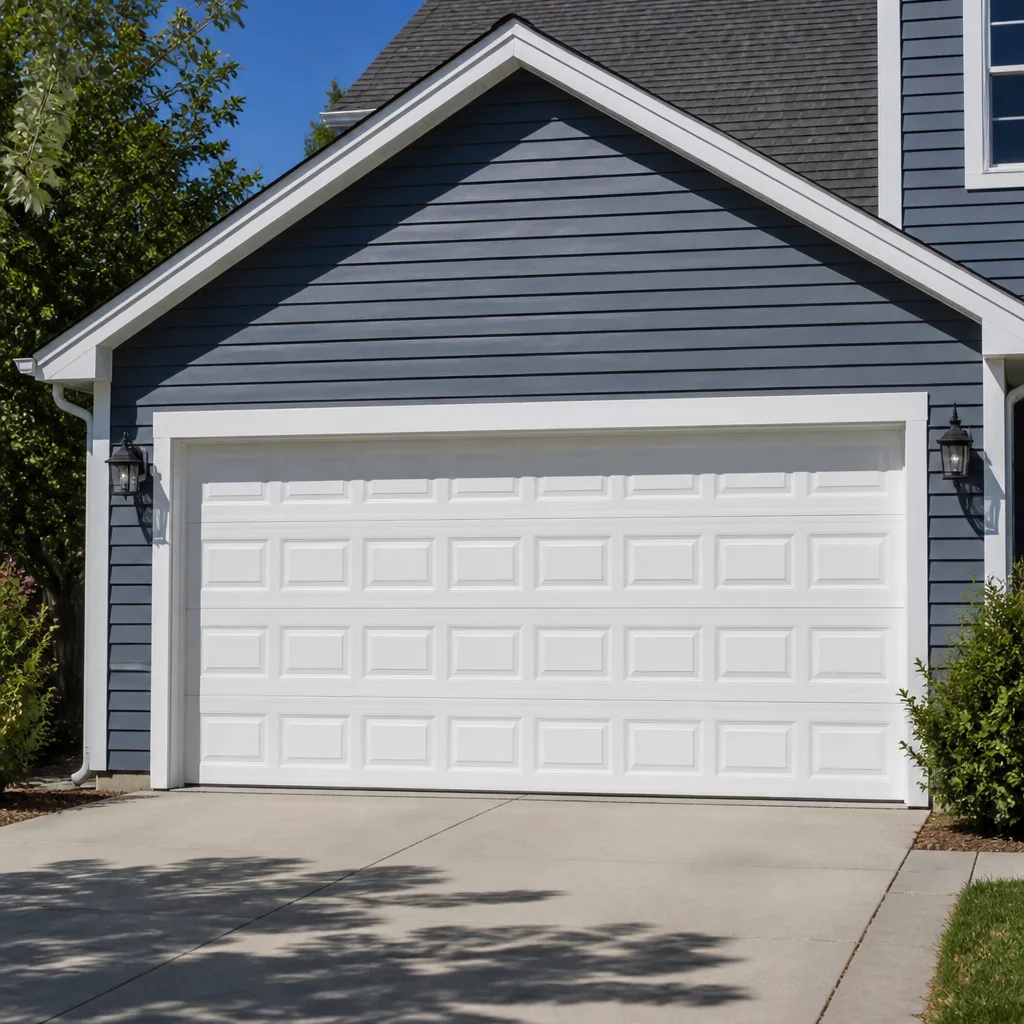 Raised-panel steel
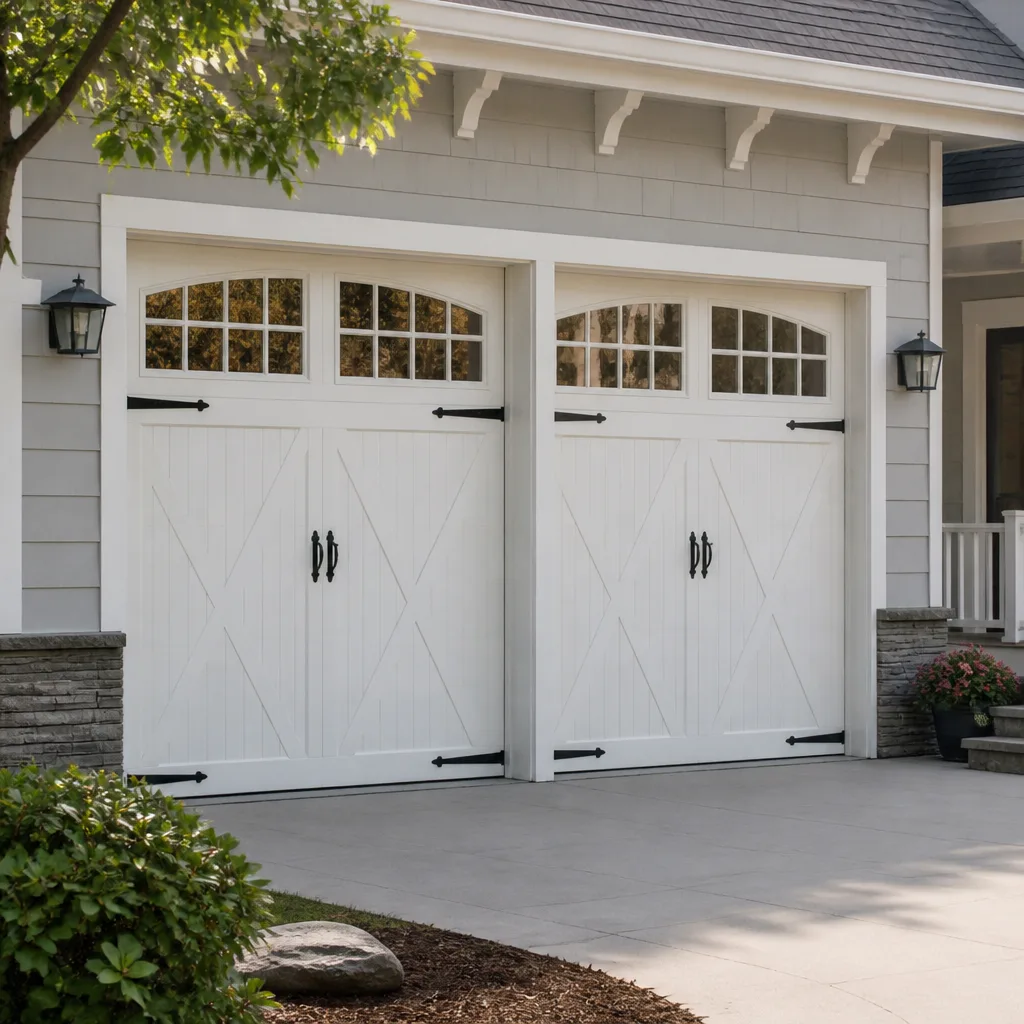 Carriage house
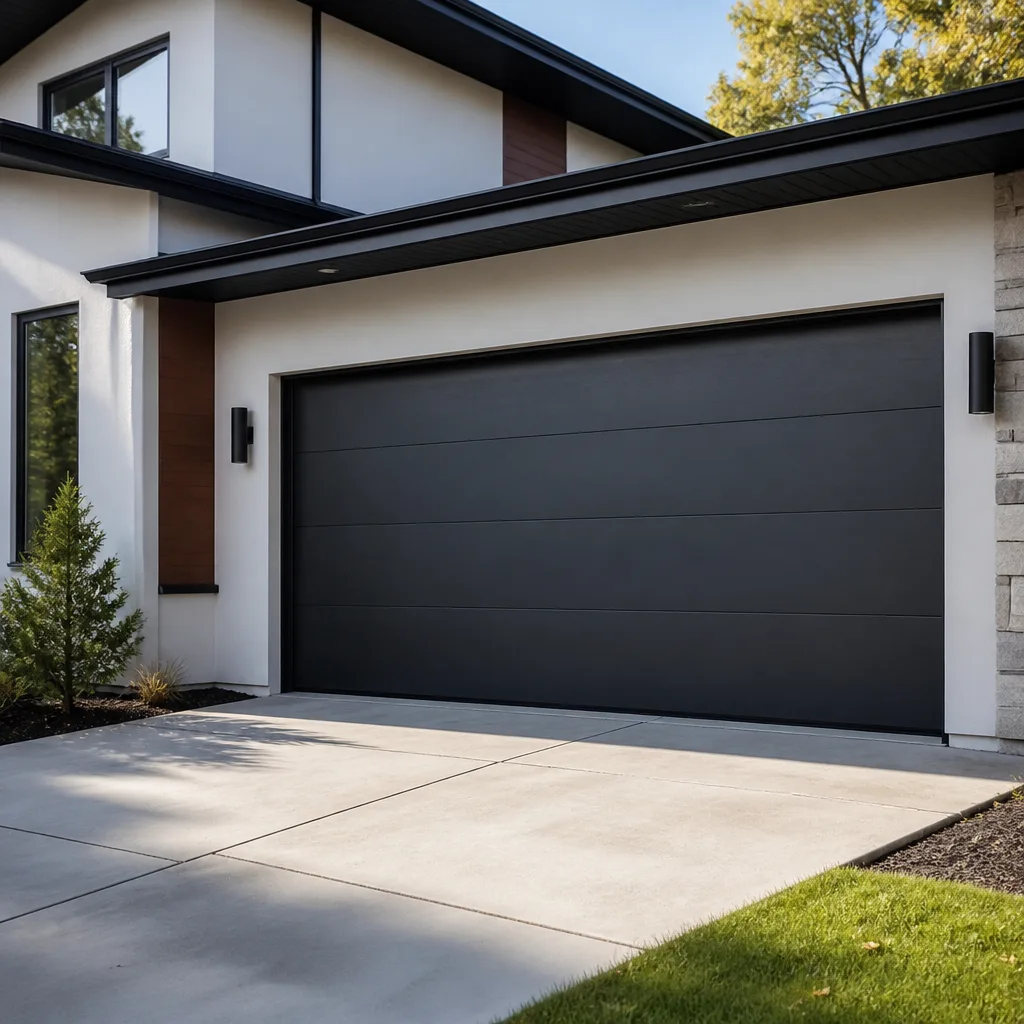 Modern flush
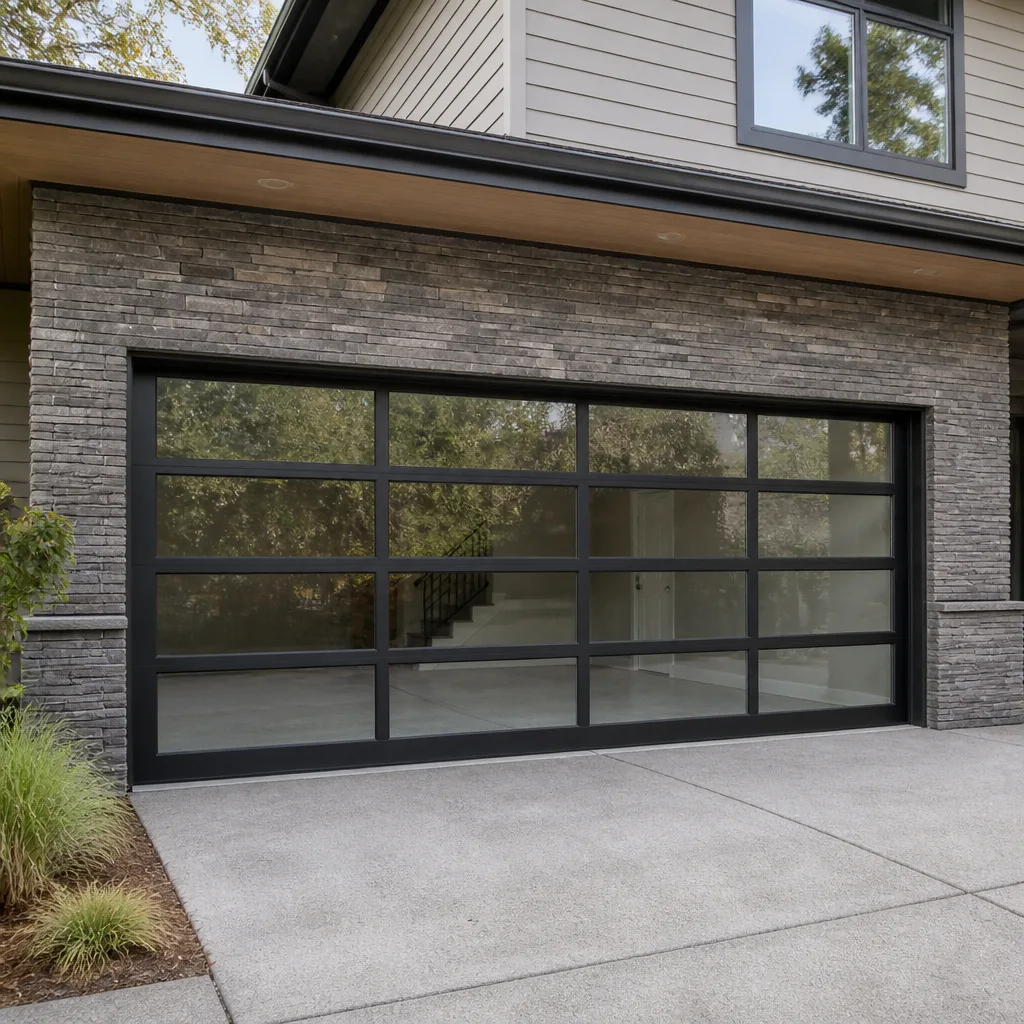 Full-view glass
 LiftMaster openers
 Chamberlain openers
Full 25-point door and opener safety check with every visit - springs, cables, rollers, tracks, and your LiftMaster or Chamberlain opener included
You get a price before we start. It does not change when the pro arrives.
Get your free estimateGarage Door Warning Signs: A Goodyear Homeowner’s Reference Guide
A garage door doesn’t snap, fail, or fall without warning. It telegraphs the problem for weeks beforehand, usually in ways homeowners have never been taught to read. Most people wait for the obvious signs, the bang of a broken spring or a door stuck halfway up, and by then a small adjustment has turned into a full replacement. We see this pattern all the time in Goodyear, where the desert heat quietly stresses every moving part on the door while the door itself still looks perfectly normal. This guide teaches you to read your door the way our technicians do: pattern recognition, not just symptom reaction. You’ll learn the asymmetry check, the seasonal opener quirks that matter, and the desert-specific warnings most lists leave out.
Quick Answer
Garage door warning signs in Goodyear fall into two groups: what the door looks like (uneven hang, sagging panels, worn bottom seals) and what it sounds and feels like (grinding, slow rise, jerky travel). The earliest reliable signal is asymmetry – a door that looks slightly crooked is a door under uneven stress. Spotting it early usually means a smaller, simpler repair than waiting for a cable or spring to let go.
Styles & brands we work with
- Raised-panel steel
- Carriage house
- Modern flush
- Full-view glass
- LiftMaster openers
- Chamberlain openers
Table of Contents
- The Asymmetry Test: A 10-Second Check That Predicts a Snapped Cable
- Why “Slow Going Up, Fast Coming Down” Points to Spring Tension, Not the Opener
- Intermittent Opener Behavior in Summer Heat: What It Actually Means
- The UV-Withered Bottom Seal: A Desert Warning You Can Test Yourself
- Rust Patterns and Dust-Storm Abrasion: What Hardware Wear Looks Like Here
- Noise, Vibration, and What Each Sound Is Telling You
- A Seasonal Walkthrough Checklist for Goodyear Doors
- Repair or Replace? Reading the Accumulated Wear
The Asymmetry Test: A 10-Second Check That Predicts a Snapped Cable
Stand outside your closed door and look at the gap between the bottom of the door and the ground on both sides. Then step back and look at the horizontal lines of the panels. If one side sits a fraction higher than the other, or the panel lines don’t look perfectly level, you’re looking at a door that’s loading unevenly on its cables and springs. That small visible tilt is one of the most useful early warnings there is, because cables don’t usually snap without a period of rising stress beforehand.
A garage door is a balancing act. Two cables, a torsion or extension spring system, and parallel tracks have to share the door’s weight evenly. When anything goes slightly out of balance, one side carries more than its share. The door can keep working in that condition for a while. That’s exactly why people ignore it. But the extra load accelerates wear on the cable that’s carrying more, and the door starts to drift off-level further.
Here’s how to run the asymmetry test in a few steps:
- Close the door fully and stand back around ten feet, facing it straight on.
- Look at the bottom gap on both sides. One side touching and the other showing a strip of daylight is a tilt signal.
- Compare the horizontal lines across the panels. They should be parallel to the floor and to each other.
- Watch it travel as someone else opens it. A door that shudders or shifts sideways in the tracks needs a technician’s eyes.
None of that involves touching the hardware. Good, because you shouldn’t. Torsion springs, cables, and their anchor points hold enough stored energy to cause serious injury if someone untrained tries to adjust them. We always recommend leaving any tension adjustment to a trained professional. If the asymmetry test looks off, that’s your signal to arrange garage door repair before the door gets worse, not after.
Why “Slow Going Up, Fast Coming Down” Points to Spring Tension, Not the Opener
The springs do the heavy lifting on a garage door. Their job is to counterbalance the door’s weight so the opener only has to guide it. When the springs lose tension, the opener starts doing work it wasn’t designed for. You notice it as a change in how the door travels: sluggish on the way up, then dropping faster than it should on the way down. Many homeowners assume the opener is failing and start shopping for a new one. Usually it’s the springs talking.
The logic is straightforward once you picture it. Rising, the door and the springs work together, so a tired spring leaves the opener straining. Descending, the springs are supposed to slow the door’s fall. Weakened springs can’t hold it back, so the door comes down quicker. Same door, same opener, two different behaviors depending on direction. That contrast is the tell.
Heat plays a part in this in Goodyear. The garage interior can get genuinely hot in summer, and repeated thermal cycling stresses springs and their mounting hardware over time. You may notice the change progress gradually through the warm months, which is why it’s easy to dismiss. Watch for these alongside the slow-up, fast-down pattern:
- The door feels heavier when you disengage the opener and lift it by hand (test gently, and only with the opener fully released).
- A gap in the spring coils, or a spring that looks stretched compared to how it used to sit.
- Loud popping or twanging sounds during the door’s travel.
- The door drifting partway down if you lift it manually a foot or so and let go.
If those signs are present, the springs are the place to look first, not the opener. Our technicians have up to 11 years of experience reading exactly this pattern, and it’s one of the most common misdiagnoses we correct. If it does turn out to be the opener, that’s a different job: see our page on garage door opener repair for how we approach the electronics side.
Intermittent Opener Behavior in Summer Heat: What It Actually Means
An opener that stops halfway, reverses for no clear reason, or refuses to respond on the hottest afternoons is sending a message. Sometimes that message is heat-related electronics behaving within normal limits. Sometimes it’s a genuine logic board on its way out. The two look similar to a homeowner, which is why it takes a trained eye to tell them apart. The important thing is to notice the pattern, not just the single episode.
Heat affects opener electronics in predictable ways. Motors run hotter, internal components can behave differently when the garage is very warm, and some safety sensors get fussy in strong low sun. So a single failure on a 110-degree afternoon is not, on its own, proof of a bad unit. But intermittent failures that get more frequent, or that happen at cooler times too, start to point somewhere more serious.
Use this quick decision list to sort the possibilities:
- Check the safety sensors first. Look for anything blocking the beam, and check for sunlight hitting the receiving sensor directly. That’s the most common cause of a door that reverses on its own.
- Note the timing. Does it fail only on hot afternoons, or at random? Heat-only failures are usually the cheaper kind to fix.
- Watch the wall button too. If the wall control also fails to respond, the problem is likely in the unit or its power, not the remote.
- Count the episodes. A growing frequency means it’s time to have someone look at the logic board and connections.
Whether you’re running a modern connected system like a Chamberlain myQ setup or an older Genie or Craftsman unit, the diagnostic logic is the same. What changes is the specific part that’s failing and how we test it. That’s why we’re set up to service both legacy and smart-home-integrated platforms, rather than guessing our way through a brand we don’t know. Call (844) 834-1797 and we can talk through the symptoms before anything gets scheduled.
The UV-Withered Bottom Seal: A Desert Warning You Can Test Yourself
Aging bottom seals are the most overlooked warning sign on a Goodyear door. The seal still looks like a seal, sits in the frame, and doesn’t obviously appear damaged. But up close, the rubber or vinyl will have gone stiff and slightly gray from years of desert sun. That stiffness matters. A seal that’s lost its give can’t close easily against an uneven floor, which lets dust and wind-driven grit under the door during a monsoon storm and lets cool air out year-round.
The test takes seconds. Reach down and press the seal with your thumb. A healthy one gives easily and springs back. A worn one feels like plastic, holds the indentation, or cracks at the edges. You can also look for a set pattern in the rubber where it’s permanently bowed from the floor. If the material has gone hard, it’s past usefulness, no matter how intact it looks from the street.
Timing matters here because Goodyear’s storm season is the real test. The seal’s job is to keep wind-driven dust and water out when the weather turns, and a stiff seal is also a door that bangs and rattles. Here’s how to check yours quickly:
- Thumb test: press the seal’s lowest edge. Firm and springy means fine; hard and unyielding means replace.
- Look for small splits at the corners and along the sides, where sun exposure is highest.
- Check the gap at the floor. If light shows under a closed door, the seal isn’t doing its job.
- Feel for grit trapped against the door’s bottom edge, which suggests the seal has been pushing dust rather than blocking it.
Seals are the lowest-cost fix on this list, and yet they’re the one most homeowners skip until the dust and drafts become obvious. Replacing a worn seal is a quick job and an easy win. We mention it here because it’s a genuine early warning, not a sales line.
Rust Patterns and Dust-Storm Abrasion: What Hardware Wear Looks Like Here
Goodyear’s dust storms are hard on any hardware that’s got moving parts and sits in the open air. Wind-driven grit works its way into hinges, rollers, bearings, and the pivot points on the tracks. Over time that grit acts like a fine abrasive. It wears away protective plating and the surfaces under it, and once the plating is gone, rust takes hold. So the rust you see on a door here isn’t only about moisture. It’s often the visible late stage of long abrasion.
The practical upshot is that a Goodyear door can show accelerated wear on its hardware even when the panel finish still looks fine. Check specific spots:
- Hinges and pivot points: look for reddish-brown discoloration and grinding feel when the door travels.
- Rollers: a rougher surface, flat spots, or wobble in the roller means grit has done its work.
- Track contact points: scuffed plating and rust streaks where the rollers ride.
- Bottom fixtures and brackets: any rust creeping into the mounting hardware.
Dust-storm season tends to compress this wear into the months around the bigger storms. That’s why we tell people to inspect their hardware in the season’s wake rather than only at the start. Catching rust on a hinge is cheap. Catching it after it’s seized a roller and dragged the door along its track is not.
Noise, Vibration, and What Each Sound Is Telling You
Your door is talking to you every time it moves. Most of what it says is normal. What you’re listening for is change: a new sound, a sound that’s gotten louder, or the same sound at a different point in the door’s travel. Sound is pattern recognition, and here’s what the common ones point to:
- Grinding or scraping: usually dry rollers, worn hinges, or debris in the tracks. A lubricated roller sounds very different from a failing one.
- Banging or popping: loose hardware, or a spring or cable that’s under uneven tension. Have it looked at before operating the door again.
- Rattling: often loose nuts and bolts or a track that’s coming away from its mountings. Simple to fix when it’s caught early.
- Squealing: metal-to-metal contact somewhere. Usually the rollers or the opener’s own moving parts.
- A single sharp snap: this is the one you never ignore. If you hear a hard crack from the torsion area, stop operating the door and call.
Vibration tells its own story. If the door shudders when it starts or stops, that energy is going somewhere it shouldn’t. Often it’s a worn roller, sometimes a track that’s no longer square. Vibration also loosens the very fasteners holding everything together, which makes the vibration worse. Break that loop early and you avoid the big repair.
A Seasonal Walkthrough Checklist for Goodyear Doors
Pattern recognition is what this guide is about, and the easiest way to build it is to run a short walkthrough at four points in the year. You’re not fixing anything. You’re just looking, listening, and noting changes. Here’s the routine we’d suggest:
- Start of hot season: run the asymmetry test, watch for the slow-up, fast-down pattern, and listen for new sounds. Photograph the door from the same spot so you can compare later.
- Mid-summer: check for intermittent opener failures and note their timing. Check the bottom seal’s flexibility with the thumb test.
- Before storm season: look at the bottom seal and the tracks. Press each hinge gently and listen for any grinding. Any seal that’s gone hard should be replaced before the storms arrive.
- After big storms: inspect hardware for new rust and grit. Wipe down track contact points and listen for a rougher roll.
Note the changes each time. A door that’s been slowly getting louder for a season is a very different case from a door that was quiet last month and isn’t now. That change, over time, is exactly the kind of pattern our technicians read on a service call. You can develop the same ear with a handful of these check-ins.
Repair or Replace? Reading the Accumulated Wear
At some point the question stops being “what’s the warning sign” and starts being “is this door at the end of its life.” The answer usually comes from the pattern the door has given you over a season or two, not from any one symptom. A door with a single worn seal and a squeaky roller is a repair. A door that’s uneven, sluggish, rusting at multiple hinges, and noisy all over is a different conversation, about whether you’ll spend more keeping it alive than replacing it.
Here are the factors we weigh:
- How many systems are involved. One failing part is repair. Springs, cables, rollers, and opener failing together is a case for a new door.
- Whether the panels are still sound. Denting, rust-through, and separating panels can’t be fixed with hardware work alone.
- How it closes. A door that no longer seals even with a new bottom seal is starting to cost you on comfort.
- The look of the thing. A Goodyear door that’s sun-faded and out of character with the house is worth pricing as a replacement, so you can compare the two numbers.
When replacement comes up, we’ll talk through a Clopay or Amarr door as readily as anything else, since we work on your brand rather than pushing one. A free measure and a written estimate will show you exactly where each option sits. That’s a scheduled job, not a repair, so it comes together on your timeline. If you’d like to see how we handle the full arc, from a broken spring to a brand-new door, our Mariner Garage Door Repair page lays out the three service categories.
Common Mistakes to Avoid
- Replacing the opener when the door is the problem. If the door is slow on the way up and fast on the way down, the springs are tired. A new opener will be working just as hard on existing springs.
- Ignoring a door that looks slightly crooked. That small tilt is one of the earliest and cheapest signs to act on. Waiting for the loud snap is the expensive version.
- Assuming a stiff bottom seal still works. In the desert sun, a seal can look intact while having lost all its flexibility. Test it with your thumb, not your eyes.
- Skipping the hardware check after a dust storm. Grit does its damage quietly. A quick inspection in the wake of a storm catches wear before it becomes a seized component.
- Trying to adjust springs or cables yourself. These parts carry stored energy that can cause serious injury. A trained professional should handle anything involving tension.
- Confusing a heat-related opener hiccup with a dead logic board. A single hot-day failure is often harmless. A pattern of them is what needs attention.
- Judging the door from the street only. Most of the early signs, on the seal and the hardware, are only visible up close and once in a while.
See the difference
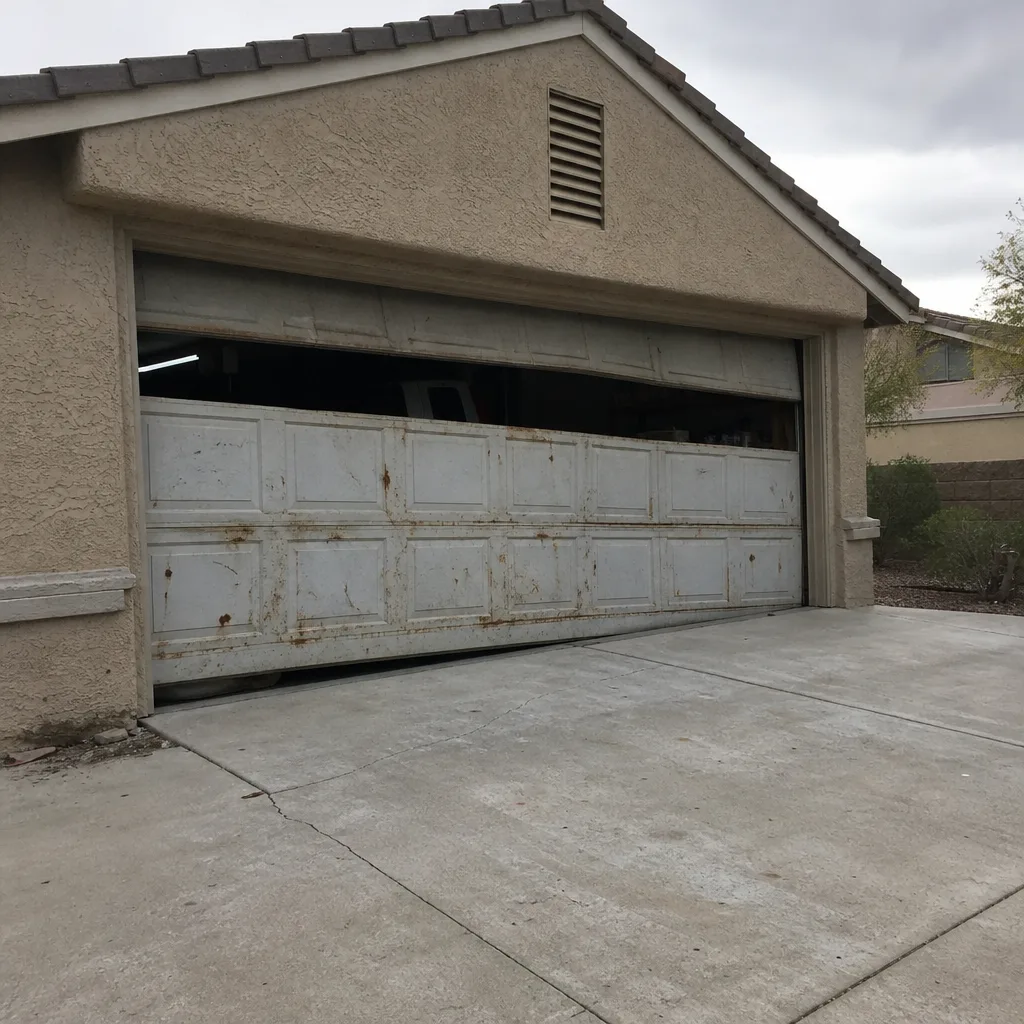 Before
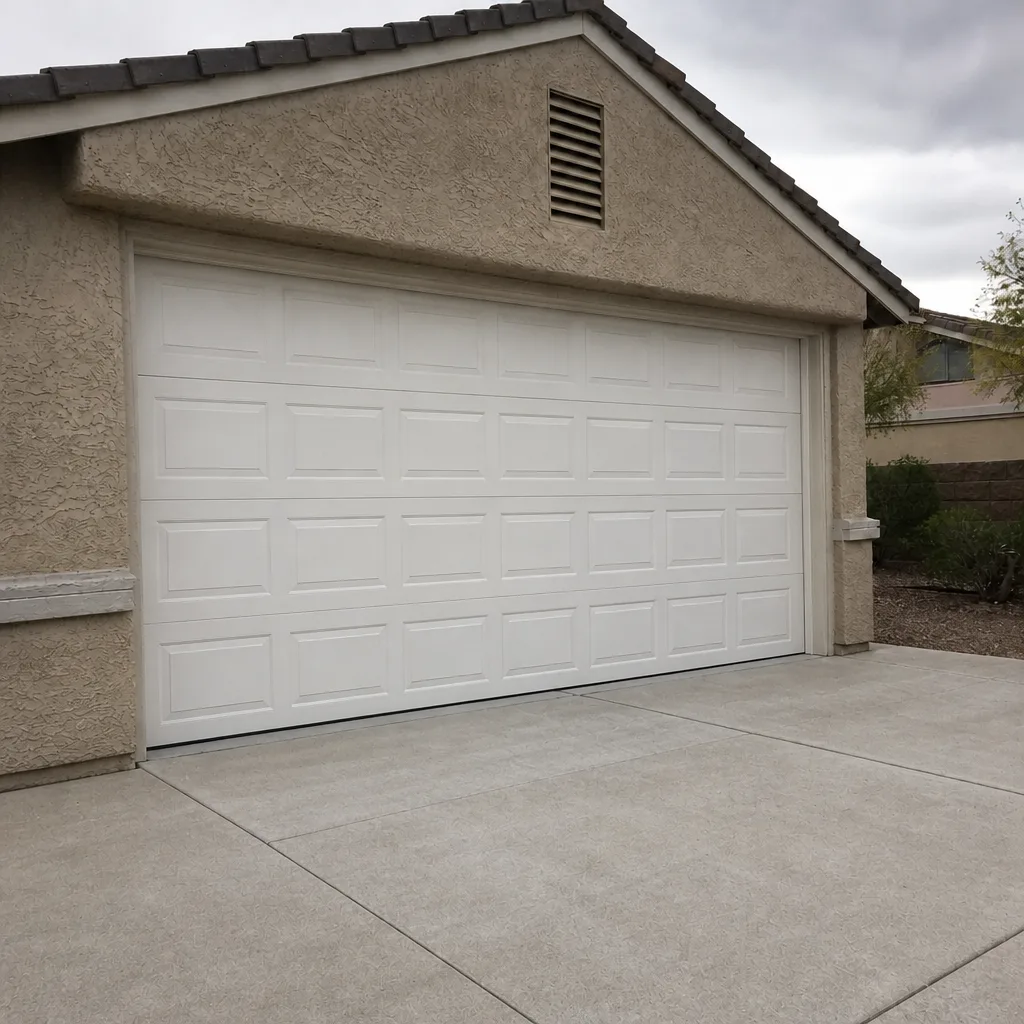 After
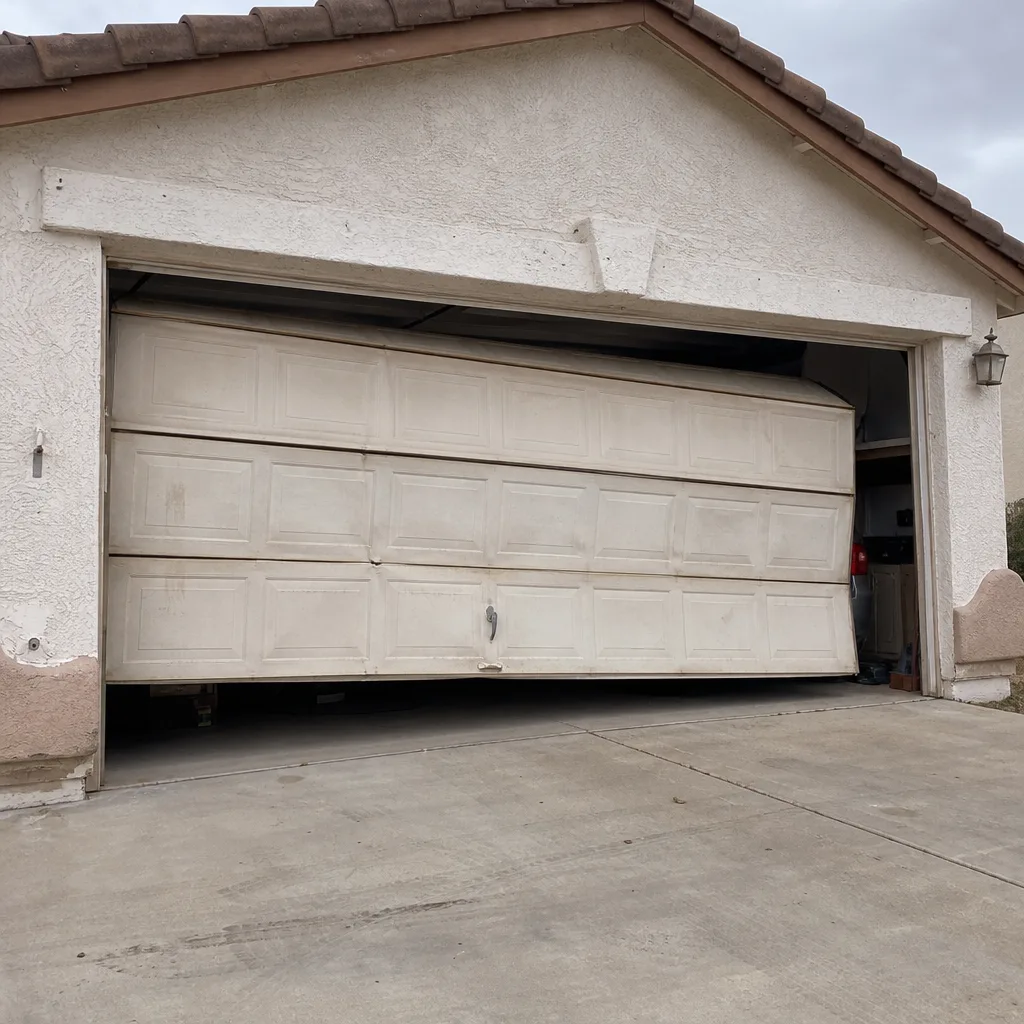 Before
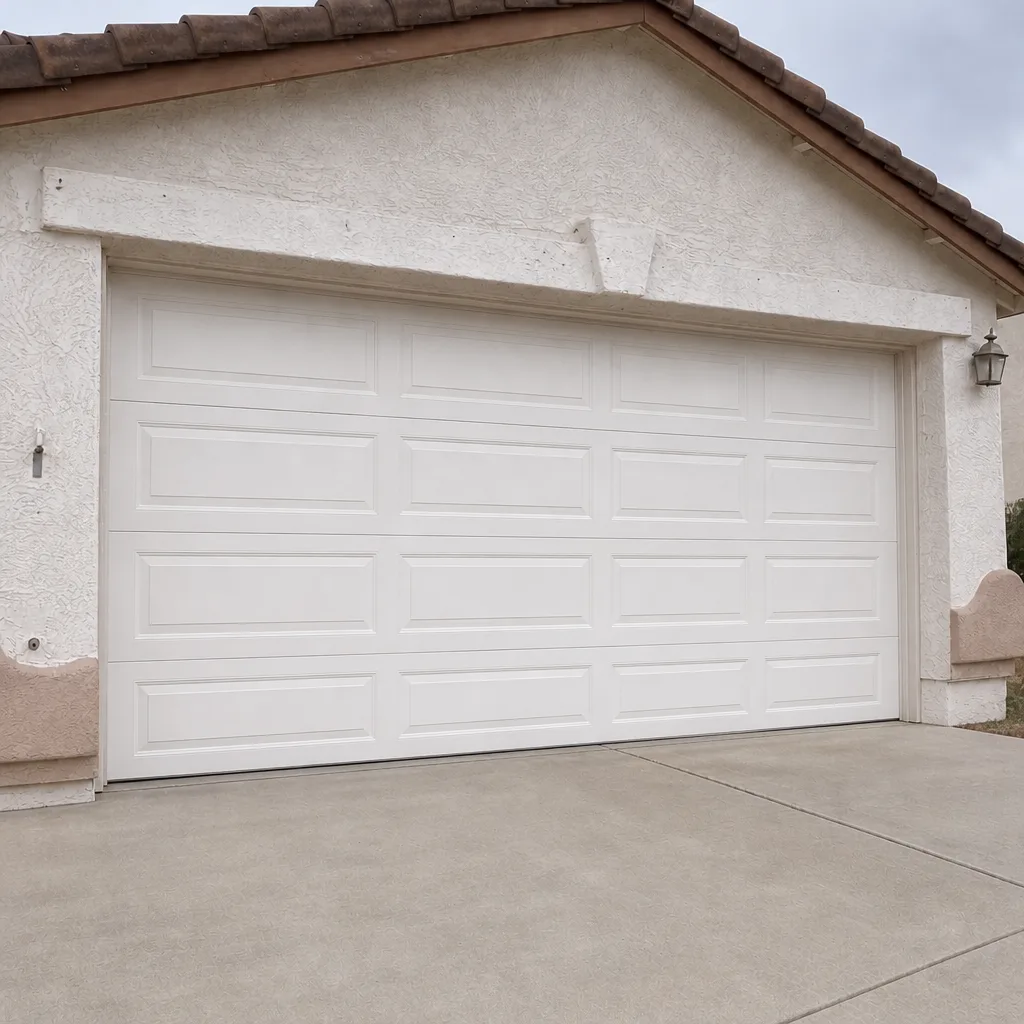 After
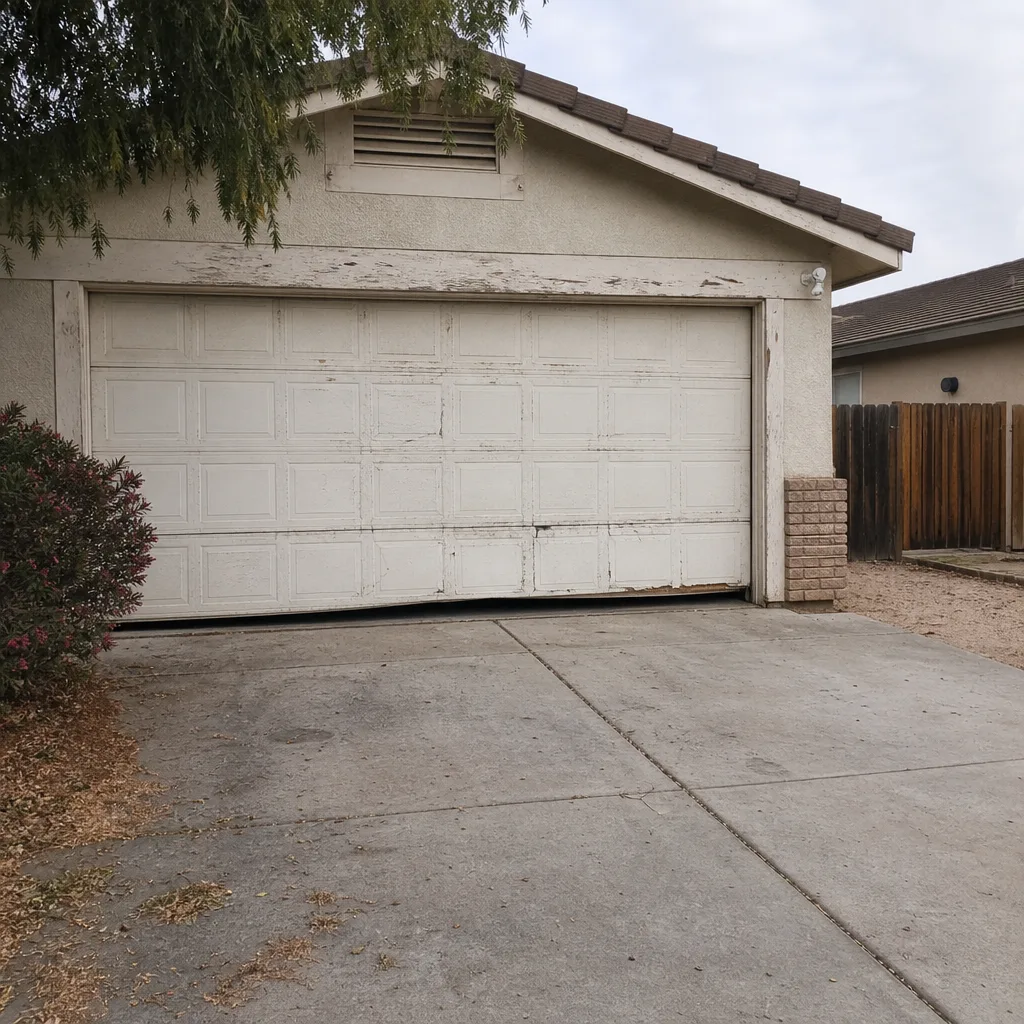 Before
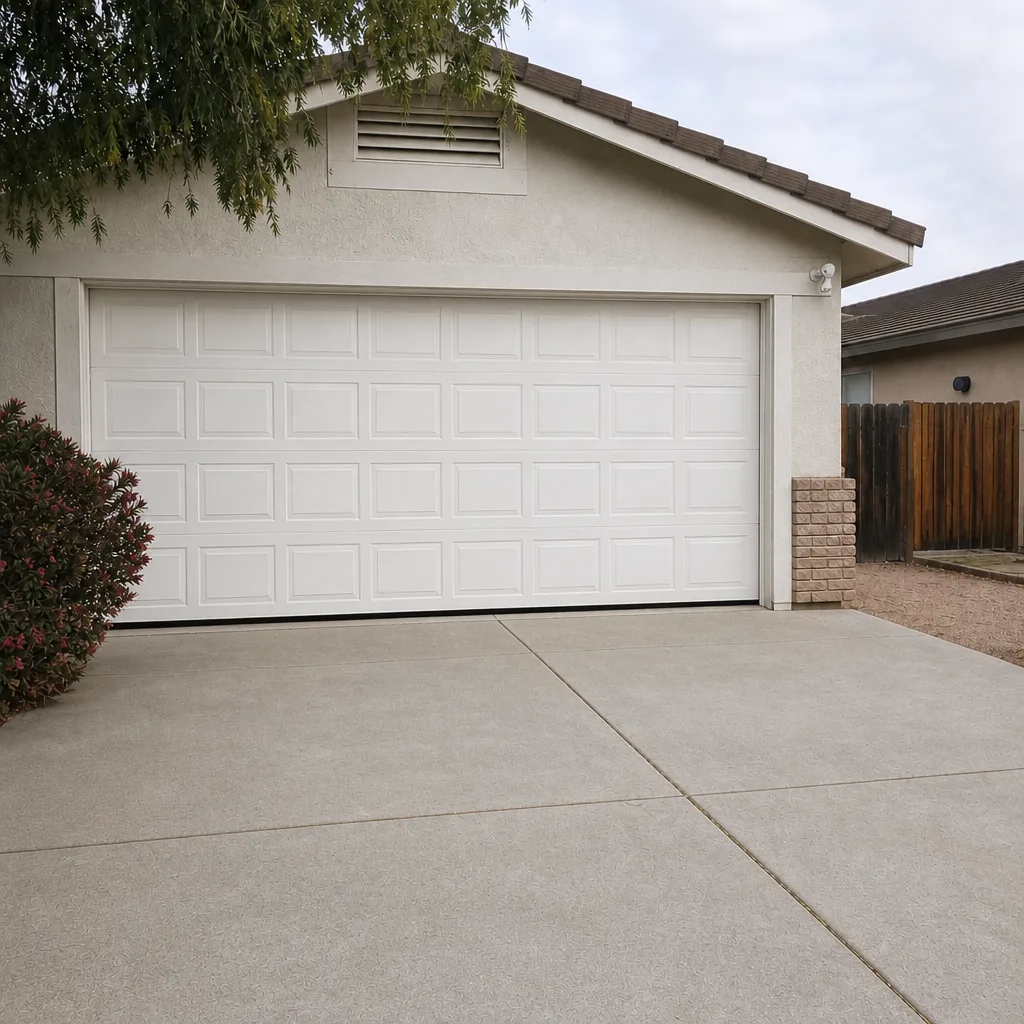 After
When to Call a Professional
Call a professional when the door is uneven, when travel is sluggish one way and fast the other, when you hear a hard snap, or when the door becomes hard to operate. Any of these involve tension or balance work you shouldn’t attempt yourself. If the opener fails repeatedly, or the hardware is rusting and grinding, that’s also a call worth making, before small wear turns into a bigger repair. Our technicians know these systems and diagnose them quickly. Mariner Garage Door Repair offers free estimates in Goodyear: call (844) 834-1797. We answer 24/7, with fast dispatch from 7am to 7pm. We serve homeowners across Goodyear and the surrounding neighborhoods, and we’ll tell you honestly what the door needs.
Frequently Asked Questions
A door that looks slightly uneven when you stand back and look at it head-on. Asymmetry means the cables and springs are loading unevenly, which is usually the beginning of a bigger failure. A 10-second check is often all it takes to spot it before the loud failure comes.
Not necessarily. Heat can make an opener behave differently, and a single hot-day failure is often a sensor or a heat-related hiccup. A growing pattern of failures, including cooler days, points more toward the board or connections. It’s worth having it looked at.
The springs have lost tension. They help lift the door and slow it as it falls; weakened springs can’t do either job well, so the opener strains on the way up and the door drops faster on the way down. This is a spring issue, not usually an opener issue. Call (844) 834-1797 for an exact quote – estimates are free.
Only if it’s lost its flexibility. Press it with your thumb; if it feels hard and holds the indentation, it’s past its useful life no matter how it looks. In the desert sun, that stiffness happens faster than most people expect, and a stiff seal can’t keep out wind-driven dust or drafts.
It can be. Grit abrades the protective plating on rollers and hinges over time, and rust follows. Small rust on a single hinge is an easy fix; rust that’s spread into multiple pivots means the door’s hardware is wearing out and should be inspected.
No. Torsion springs and cables hold stored energy that can cause serious injury when handled without training. Any adjustment involving tension should be done by a trained professional. If your door is uneven or hard to move, call us for an estimate instead.
The Bottom Line
Your garage door warns you long before it fails, but the signs are pattern-based, not event-based. The asymmetry test is the fastest read, and the slow-up, fast-down pattern tells you to look at the springs rather than the opener. In Goodyear, add desert-specific checks: the UV-hardened bottom seal before storm season, rust on hardware after a dust storm, and intermittent opener behavior watched for its timing. Build a quarterly habit of looking, listening, and noting changes. Catch these early and you’re looking at a simpler, smaller repair than the phone call you’d make after the spring snaps.
If any of these signs are showing on your door, we’re glad to take a look. Call (844) 834-1797. We answer 24/7. Fast dispatch from 7am to 7pm, Sunday through Friday. Free estimates, upfront pricing, and a satisfaction guarantee. For our full service menu, see garage door repair, garage door opener repair, and our home base at Mariner Garage Door Repair. Whether you’re in Goodyear or nearby, we’ll help you read the door before it fails.
Written by the team at Mariner Garage Door Repair.